Even an old dog can learn new tricks. During my recent months painting mini whiskey watercolor paintings I have made many discoveries about watercolor paints. These can be helpful to both beginner and experienced watercolor artists.
Like other long-time watercolor artists, I have amassed a sizable collection of watercolor paints. I’ve used various brands and favored some over others. I use professional-grade (vs. student-grade) fine watercolors in tubes. I most often use Golden Paints’ QoR, Daniel Smith, and, less often, Holbein. Professional watercolor paints can be expensive, and painting mini whiskey paintings has taught me a some ways to save money as well as some ways to use my paints more effectively. Here are some tips:
- Use Dot Cards: Silly me - I had several “Dot Cards” among my watercolor supplies, provided as part of my fee when I took an online workshop, but I had tucked them away unused. As shown below, Dot Cards are sample sheets with small dried blobs of actual watercolor paint, adhered to heavy paper. They are offered to allow artists test a manufacturer’s colors before buying full tubes. It’s hard to know how a color will look and behave even with info pages manufacturers make available, so Dot Cards are a great testing-ground. The dried dots are easily re-wet and, even in these small amounts, go a long way. Many manufacturers of watercolor paints offer samples of their professional watercolors as Dot Cards, including Daniel Smith, Schmincke, Maimeri and Winsor & Newton.
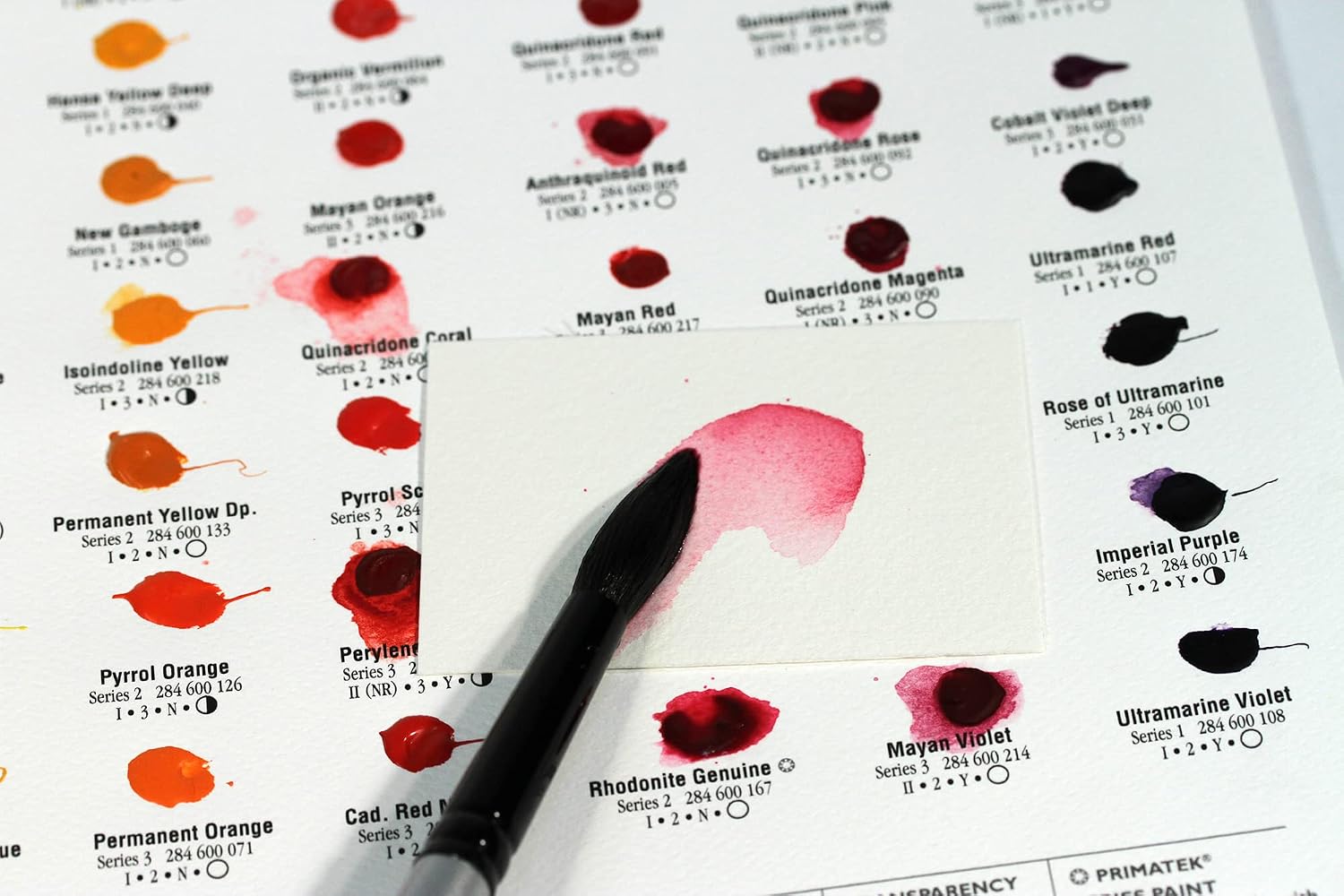
Daniel Smith’s biggest Dot Card, with 266 watercolors and 22 gouache colors, sells for about $30 - approximately 10¢ per dot! The company offers many Dot Cards with fewer colors, including favorite color palettes of specific artists. In comparison, the smallest tubes of their paint (5ml) start at about $7 each. I recently bought a 5ml tube of Daniel Smith’s “Quinacridone Coral” for over $8 and a color called Jadeite Genuine retails for $10.50.
So I finally used my Daniel Smith Dot Cards for my whiskey paintings. One was a card of 24 dots, called the Scott Stevenson Palette. From this one I used many colors, and nearly wiped out the color called Green Gold. I have Green Gold as Golden fluid acrylic paint and I have always loved its transparency and brilliant yellow-green hue. The dot card gave me the chance to try out the watercolor version of this pigment. I liked it so much while painting my floral series that I purchased a 11ml tube of QoR Green Gold. The tube retails for over $15, but it will last me a long long time. My second dot card appeared to be handmade, perhaps at the art supply store which sent it to me, and included all Daniel Smith’s 14 Quinacridone colors. I used the latter one extensively, since Quinacridones are synthetic pigments and are very transparent. My Dot Cards paid off!
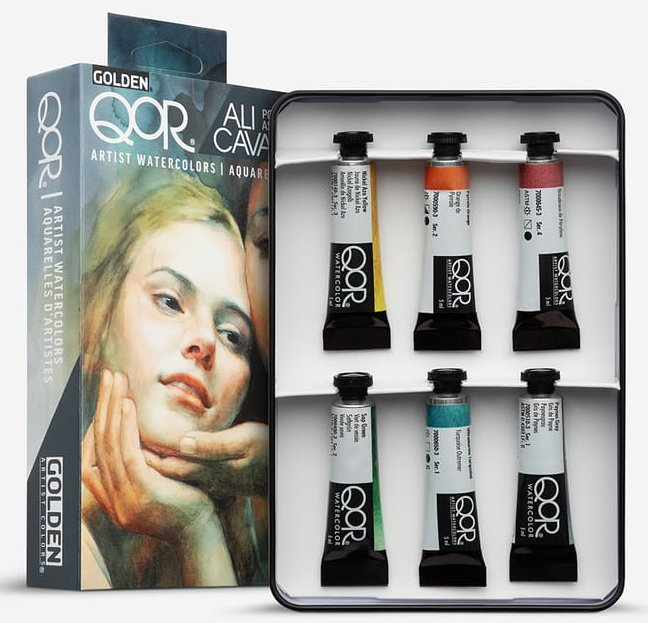
- Buy Watercolor Sets: Professional watercolors are sold in various sizes of tubes (5ml, 11ml, 15ml) and the prices vary, as mentioned above, according to the pigment used to create the paint. I had long used - and loved - Golden Paints Fluid Acrylics when I learned they introduced a line of watercolors, called QoR. To try them out I bought their “Introductory Set” with 6 colors in small 5ml tubes (I see it currently selling for $30, so about $5 per tube.). Fine paint companies offer 3, 6, 12 and 24 sets of small tubes. The small tubes last me a long time. I can squeeze a tiny amount onto a porcelain palette or butcher tray and rewet it days later, so little gets wasted. The QoR intro set was enough to convince me that I loved these watercolors and I bought individual tubes in other colors. Daniel Smith sells a $40 set of “Watercolor Essentials” primaries, which includes 5ml tubes of 2 yellows, 2 reds and 2 blues - ideal for mixing limitless shades with a limited palette of warm and cool primaries. Both of these companies offer many other sets, like QoR’s Ali Cavanaugh Portrait set of 6 and High Chroma set of 6, or Daniel Smith’s Alvaro Castagnet’s set of 10 colors or Autumn Collection of 3 colors. You will find many sets which can save you money on your watercolor paints.
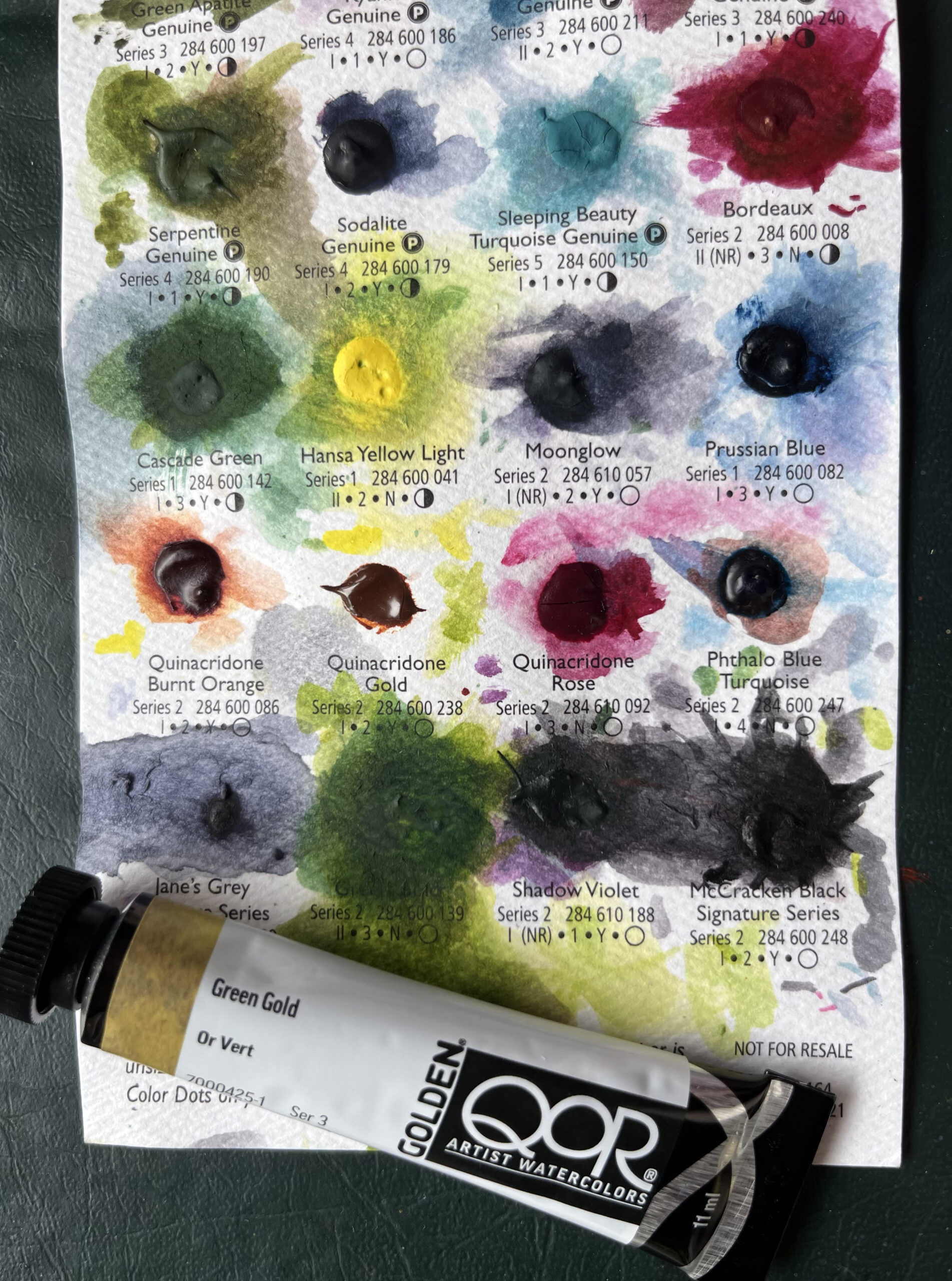
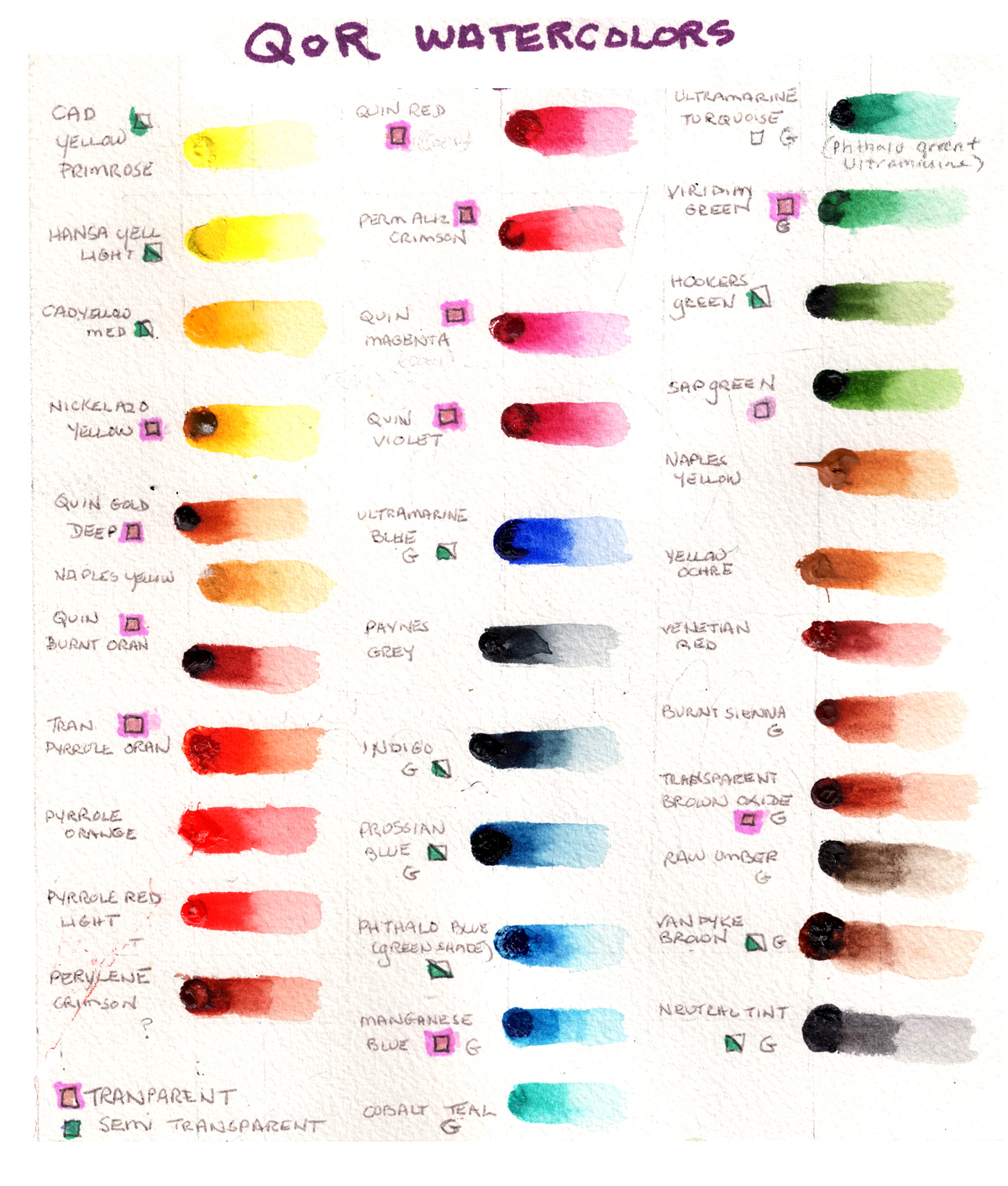
- Learn the Properties of your Pigments: When I decided to painting a series of sunlit florals, I learned from some videos that my paintings could really glow if I used transparent pigments in layers. I always considered myself a traditional transparent watercolor artist, since I never use opaque white watercolor paints, and I knew some pigments were not as transparent as others, but now I needed to educate myself better. I had amassed 35+ tubes of QoR watercolors, so, to better see the true colors and their vibrancy when diluted, I made a test card, as shown here. Manufacturers label each paint tube from transparent to opaque, so I noted these properties on my test sheet to indicate the ones which are transparent and semi-transparent. This made it easier for me to choose the most transparent pigments for my floral paintings and capture the glow I aimed for.
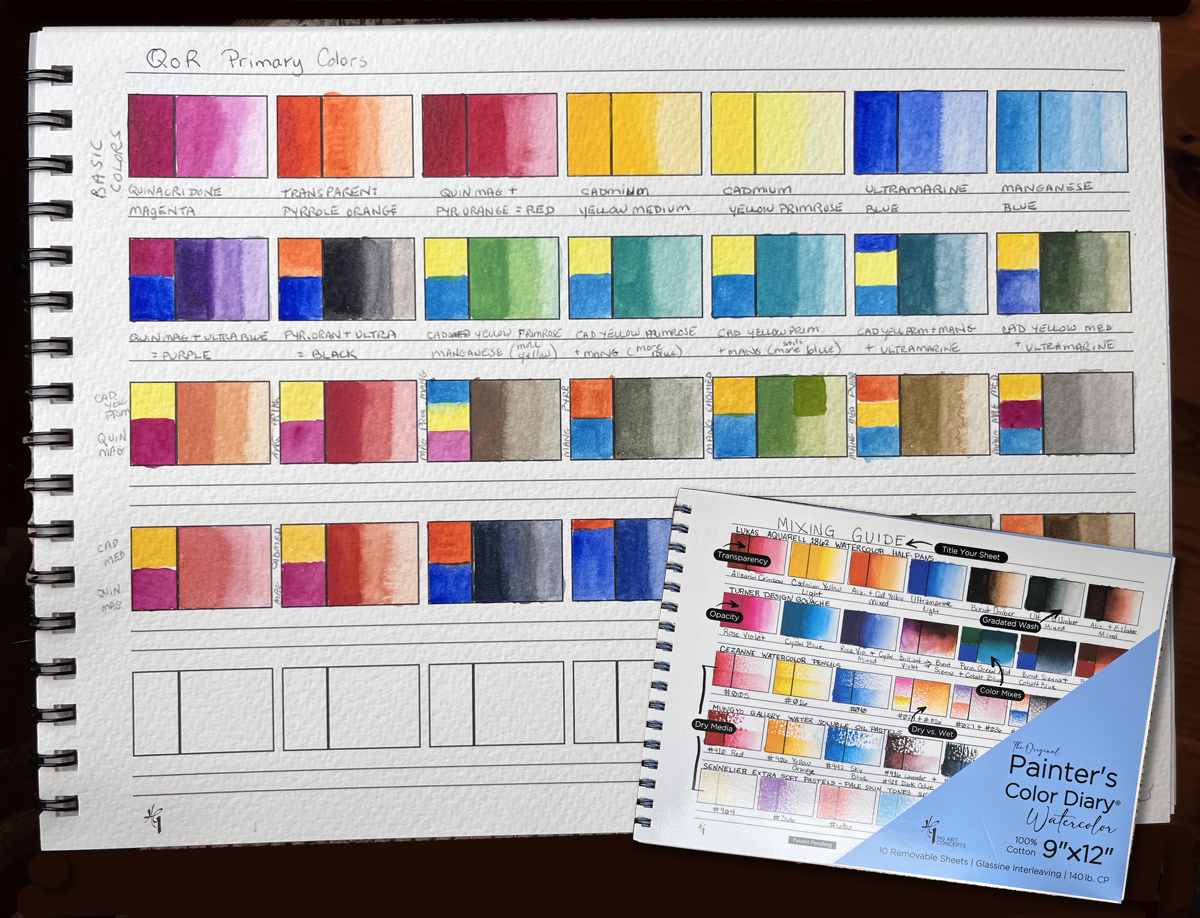
- Mix Colors: I have often created entire paintings with a limited palette of only 3 primary colors, which, when properly chosen, can be mixed to create a huge number of other colors and shades. I have a “Watercolor Diary” where I do swatches of colors right out of the tube as well as swatches of the same colors mixed together. This becomes a valuable reference as I paint and if I go back to use the same colors in the future.
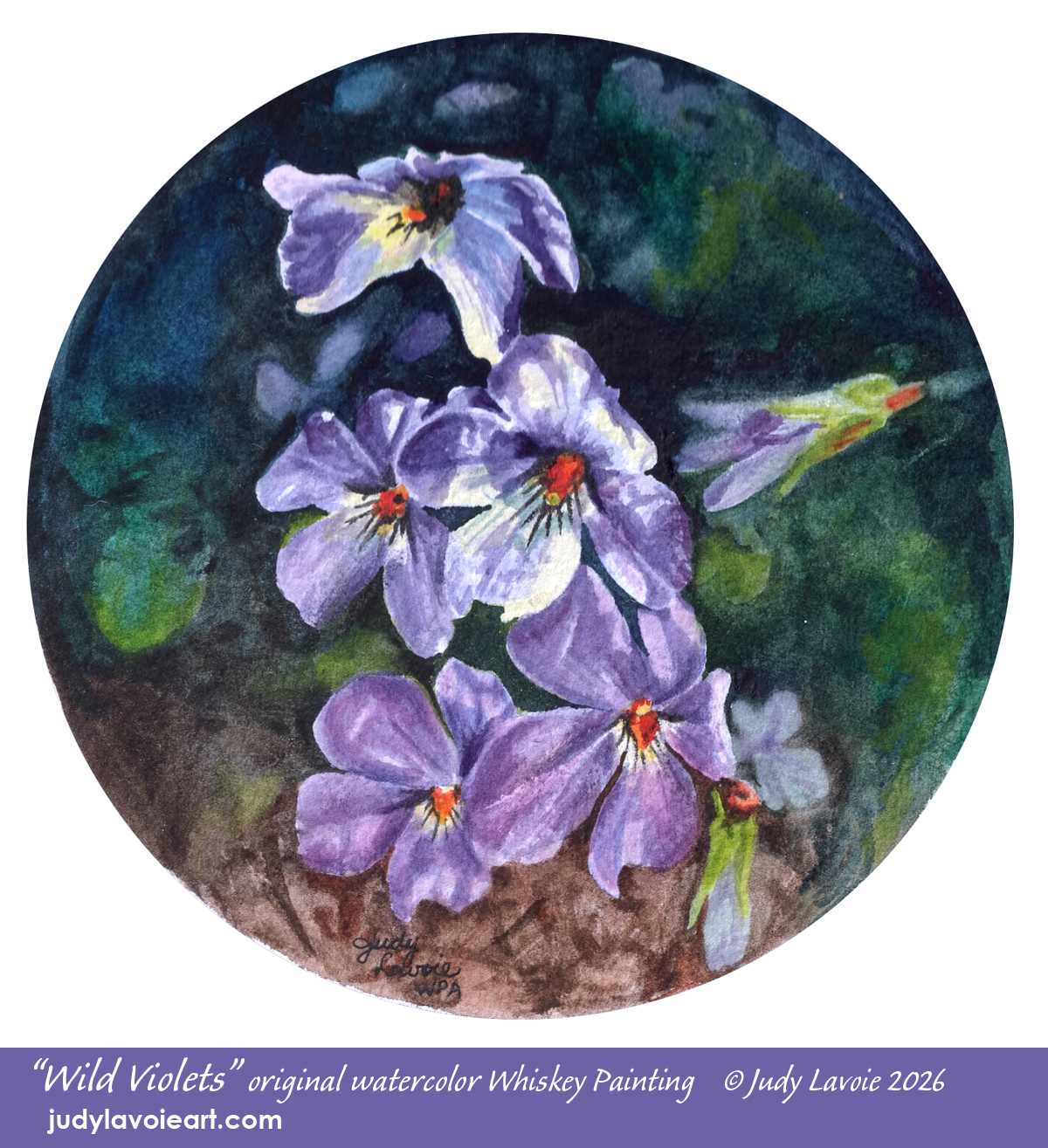
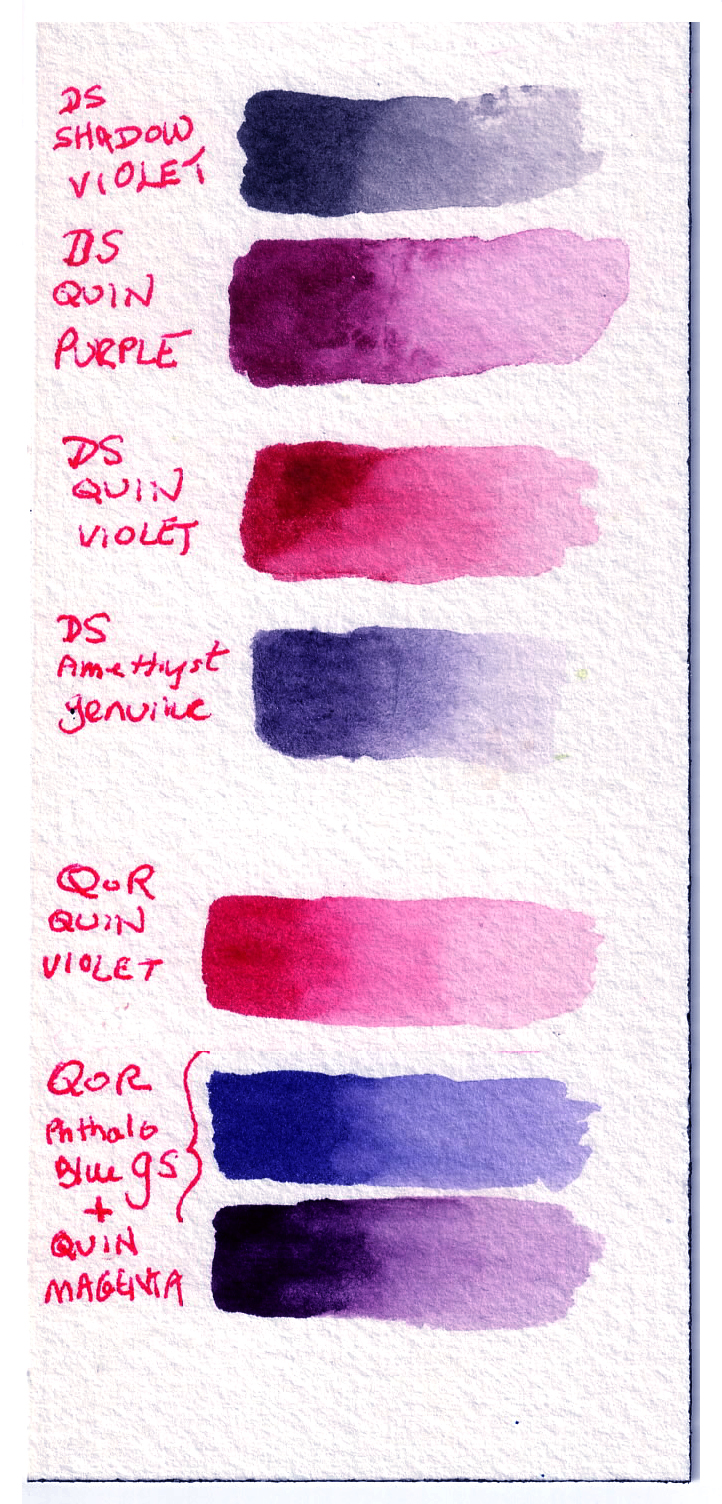
When I decided to do the floral painting of violets shown at the start of this post, I had several tubes of watercolors which had the words violet or purple or something similar in their names. It is very difficult to know the true color by looking at the watercolor tube, so I once again made a test strip, painting full strength to diluted samples of 7 purplish colors plus two swatches with mixtures of Quinacridone Magenta and Quinacridone Phthalo Blue Green Shade. I could see which purples were warm (more reddish) and which were cool (more bluish). I never expected to find so many variations of purple, so this test strip was very helpful for my mini whiskey painting of Wild Violets.
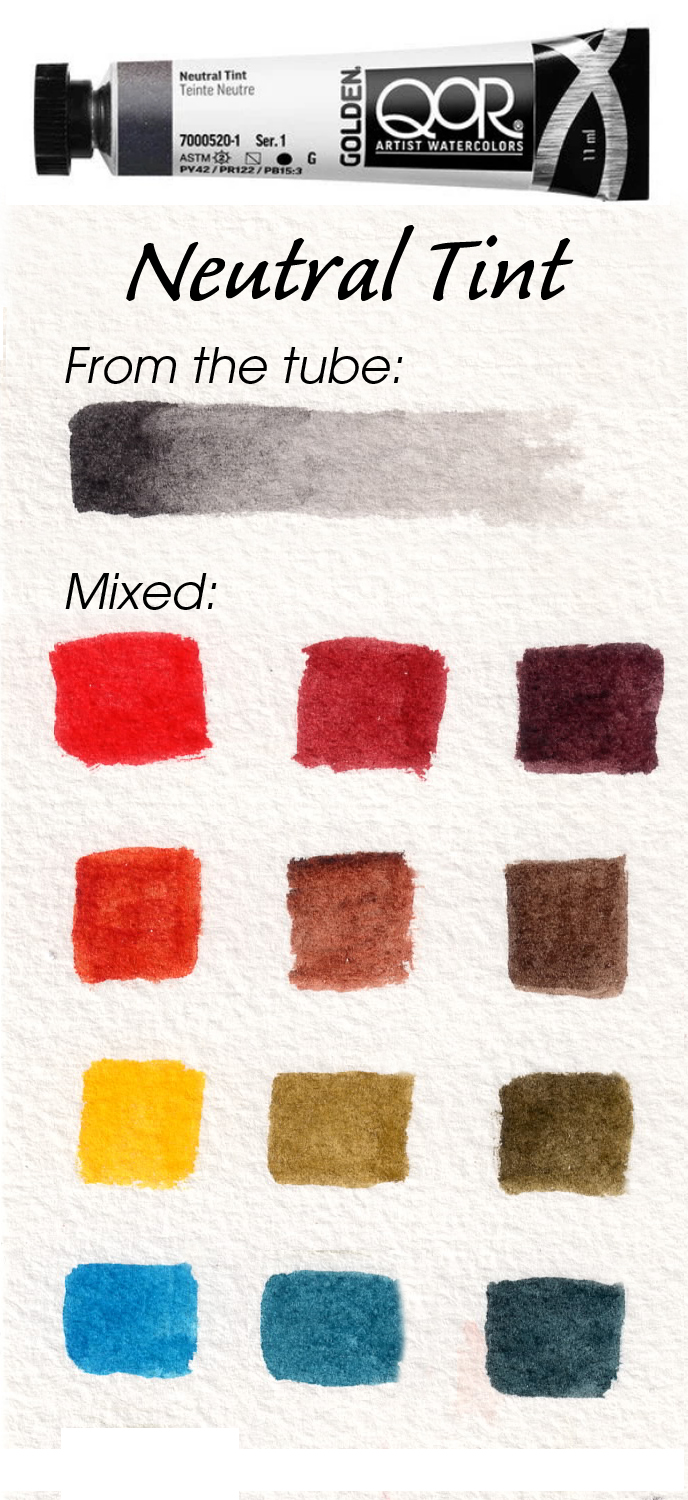
- Try Neutral Tint: I had never used the watercolor paint called Neutral Tint - why should a color with such an undefined name be needed in my paintings? Then, in a watercolor video, the artist showed how Neutral Tint can be used alone - as a dark grey from its mix of several pigments - but, more importantly, how it can shade other colors. Black and white are neutrals, but Neutral Tint is a “neutral grey” which isn’t strongly warm or cool in tone. When mixed with other colors, it darkens, desaturates, and mutes them, with an effect like you might want in a shadow area of that pure color. It doesn’t make your color look muddy. My little chart here shows how it altered several colors. This is another good way to extend your color options without purchasing many other paint colors. I bought myself a tube and love using it.
- Use Watercolor Pencils and Sticks: For the fine details I like to use, even in my mini paintings, watercolor pencils can be helpful. Not all colored pencils are water soluble; some are wax based and will not dissolve. I use Faber Castell GoldFaber Aqua occasionally. I have used them to add fine lines within my painting. I've also sometimes scribbled a colored pencil on scrap paper, hit it with a wet brush, and painted the color. I have never tried watercolor paint sticks, but they are used wet or dry and can be helpful in plain air painting.
This post is long and technical, but I hope watercolor artists will find the information helpful.